
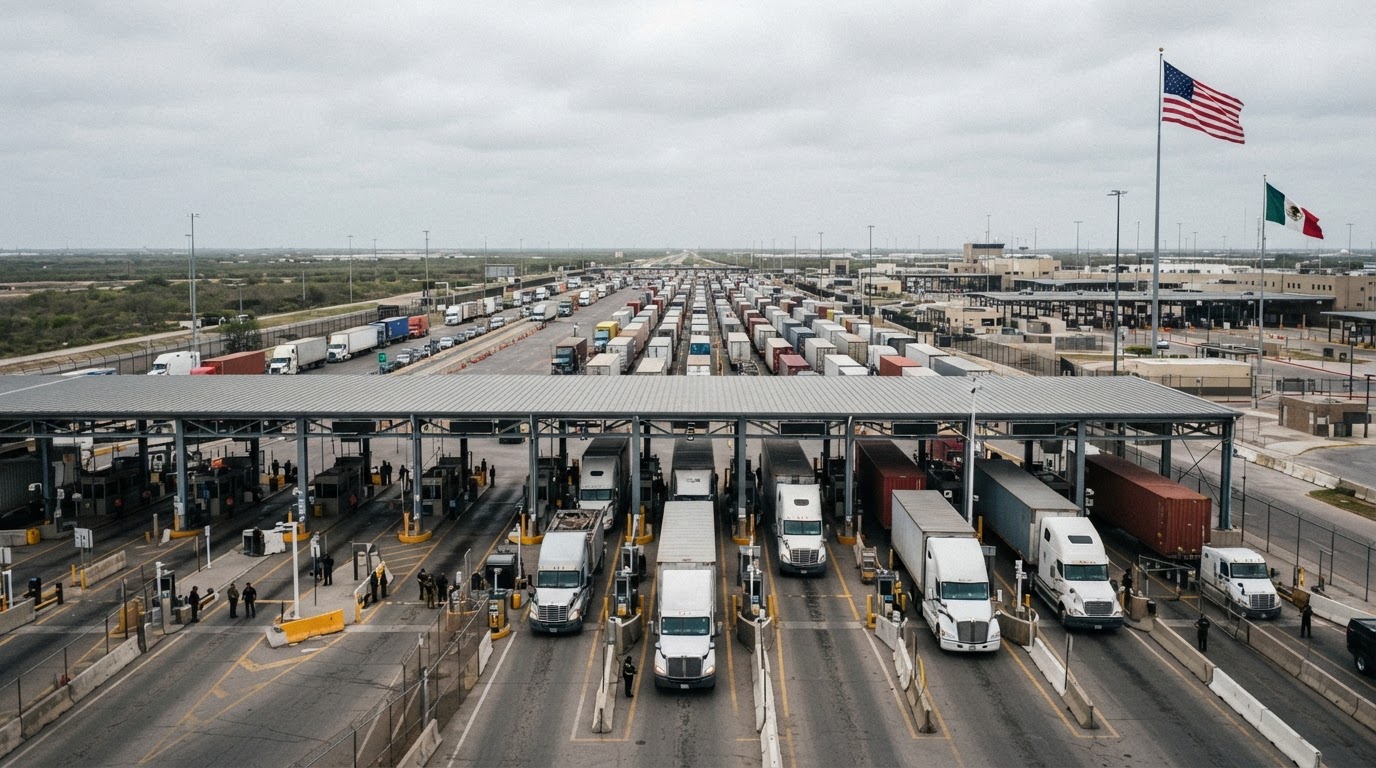
WASHINGTON — A threat by US President Donald Trump to double tariffs on Mexico has put North American trade relations back under pressure, highlighting how migration and border policy can quickly become sources of uncertainty for companies operating across the region.
Trump made the threat on Thursday, November 12, saying the United States could immediately double tariffs if Mexico did not stop a group of migrants moving north from the southern Mexican city of Tapachula. Reuters reported that the group was estimated at around 1,500 people, most of them from Central America.
Trade policy and migration become linked
The statement underscores the use of trade measures as leverage in wider political negotiations. Tariffs can affect import costs, pricing decisions and investment plans, particularly in industries where components cross the US-Mexico border several times before a finished product reaches customers.
Automotive manufacturing, electronics, industrial equipment, agriculture and consumer goods are among the sectors with significant cross-border supply-chain links. Even the threat of a tariff change can encourage businesses to review sourcing arrangements, inventory levels and contractual protections.
Uncertainty for companies and investors
For companies, the immediate issue is the difference between a political threat and an implemented trade measure. The Reuters report described a warning by the president; it did not establish that a new tariff had been formally imposed as a result of the statement.
Businesses will therefore be watching for official policy documents, announcements from relevant US agencies and any response from Mexico’s government. The scope, timing and legal basis of any measure would determine which products and supply chains could be affected.
A wider test for North American economic integration
The United States and Mexico are deeply connected through trade, manufacturing and investment. A prolonged dispute could complicate planning for companies that have built regional production networks around predictable cross-border rules.
Investors should distinguish between campaign rhetoric, policy proposals and measures that have entered into force. The next signals to watch are any formal tariff instructions, diplomatic engagement between Washington and Mexico City and changes in border conditions.
Source: Reuters reporting carried by Investing.com, published November 12, 2026.