
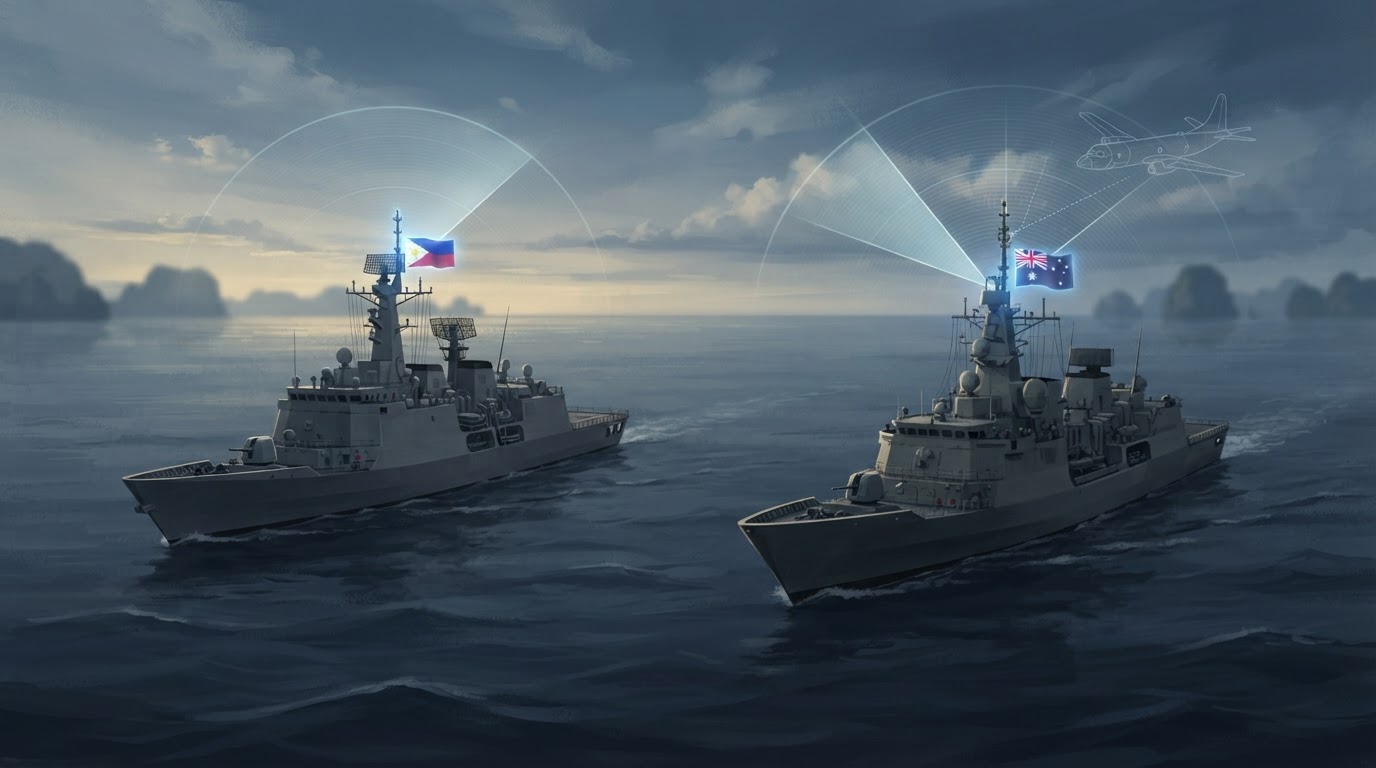
MANILA — The Philippines and Australia signed a new defence cooperation arrangement on Sunday, deepening a security partnership that both governments say will make joint military activity easier to coordinate across the Indo-Pacific.
Philippine Defence Secretary Gilberto Teodoro said the arrangement would simplify the procedures used to implement the two countries’ Status of Visiting Forces Agreement. He described the change as a way to reduce administrative steps and make cooperation more practical across maritime, air and land forces, as well as humanitarian and disaster-response operations.
Australian Prime Minister Anthony Albanese witnessed the signing during his visit to Manila for the Association of Southeast Asian Nations summit. He said the arrangement would support stronger maritime awareness and information-sharing, strategic dialogue, training, interoperability and defence infrastructure. Australia also announced additional investment in maritime-domain awareness, including drones, equipment and training intended to improve the detection of maritime and cyber threats.
South China Sea is central to the strategic calculation
The agreement comes as Manila expands its network of defence partnerships amid recurring confrontations with China in the South China Sea. The waterway is important to regional and global trade, while overlapping maritime claims have made it a persistent source of diplomatic and security tension.
Australia has backed the Philippines’ position under the 2016 South China Sea arbitration ruling, which rejected the legal basis for China’s expansive maritime claims. Beijing rejects the ruling and has criticised military cooperation between Manila and its partners as destabilising. The new arrangement does not, by itself, resolve those disputes or create a new mutual-defence treaty.
A wider signal for regional security
For countries that rely on open sea lanes and predictable maritime rules, closer Philippine-Australian coordination could strengthen surveillance, preparedness and the ability to respond to emergencies. It also adds to a broader pattern of Indo-Pacific states building practical security partnerships while seeking to avoid a direct confrontation between major powers.
The agreement’s significance will depend on how it is implemented: the scale of joint activities, the use of existing access arrangements, investment in surveillance and infrastructure, and the extent to which both governments keep diplomatic channels open with other regional partners.
Sources: Reuters reporting · Australian Defence Ministers’ joint statement · Philippine News Agency background