
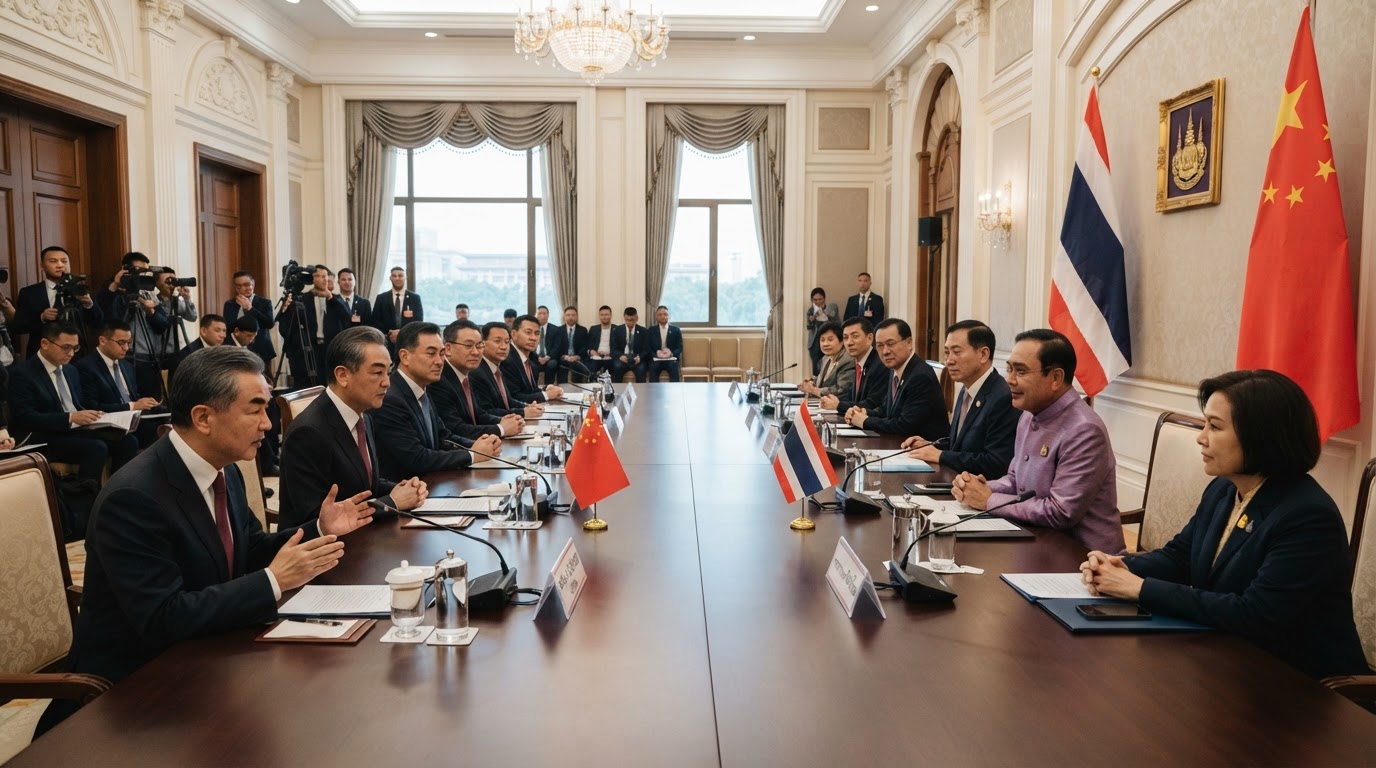
BANGKOK — Chinese Premier Li Qiang is beginning an official visit to Thailand from November 13 to 15, before travelling to the Philippines for the 29th China–ASEAN Summit, in a diplomatic programme that places trade, investment and regional cooperation in focus.
China’s Ministry of Foreign Affairs confirmed the visit dates and said Li would travel to Thailand at the invitation of Prime Minister Anutin Charnvirakul. He is then due to attend the China–ASEAN Summit in Manila from November 15 to 16 at the invitation of Philippine President Ferdinand Marcos Jr.
Economic cooperation on the agenda
Thai media reporting says the discussions are expected to cover trade, investment, finance, the digital economy, cybersecurity and cooperation in sectors including agriculture, vocational education, automotive manufacturing and the environment. The two governments are also expected to address online crime and illegal business activity.
The visit offers both sides an opportunity to advance economic links at a time when regional supply chains are being reshaped by technology competition, trade policy uncertainty and demand for new manufacturing capacity. Thailand is an important production base for vehicles, electronics and other industrial goods, while China remains a major trading and investment partner across Southeast Asia.
Regional significance of the China–ASEAN meeting
Li’s planned participation in the Manila summit gives the bilateral visit a wider regional dimension. ASEAN governments are seeking to preserve trade and investment links with major economies while managing strategic competition and disputes over security and maritime issues.
For businesses, the practical outcomes to watch include any new cooperation agreements, investment commitments and steps to improve cross-border trade or digital connectivity. Announcements will need to be assessed against implementation timelines, financing arrangements and the extent to which they create enforceable commercial opportunities.
Official schedules confirm the travel programme, but the final content and outcome of the meetings will only become clear as the discussions take place. Any agreements should therefore be treated as announced commitments rather than completed projects until implementation details are available.
Sources: China’s Ministry of Foreign Affairs; The Nation Thailand — planned bilateral discussions and cooperation agreements.