
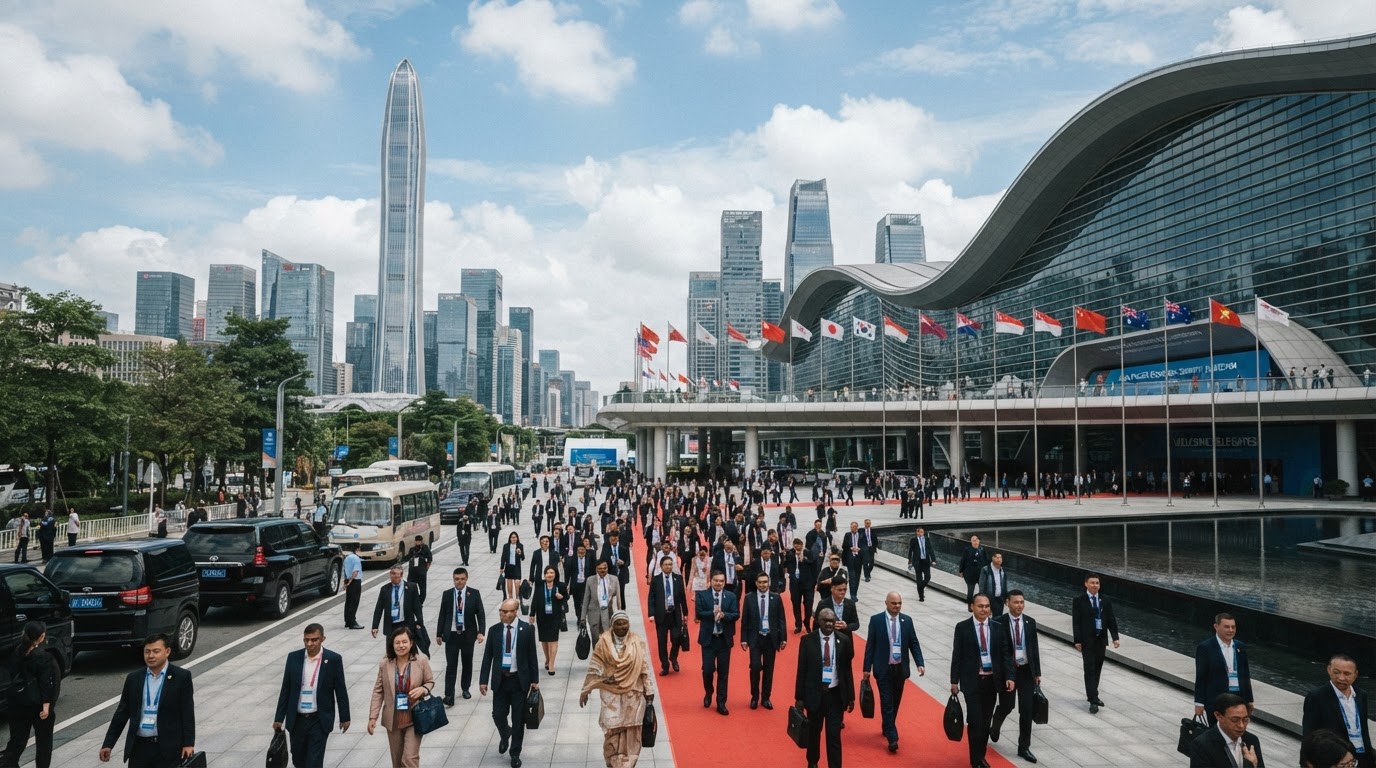
EUROPEAN DIPLOMACY — European leaders are seeking a formal place in the next phase of Ukraine diplomacy as the White House prepares an unprecedented meeting between US President Donald Trump, Chinese President Xi Jinping and Russian President Vladimir Putin on the sidelines of the APEC summit in Shenzhen.
After an informal European Council meeting in Dublin on 13 November, Council President António Costa said the European Union and five countries — France, Germany, Italy, Poland and the United Kingdom — would coordinate Europe’s contribution to the diplomatic process. The group is intended to give Europe a more coherent voice while keeping other member states involved.
On 14 November, the Associated Press reported that the White House had announced plans for Trump, Xi and Putin to meet in China on 19 November. The proposed gathering would bring together the leaders of three nuclear powers at a moment when Ukraine’s future and wider security arrangements remain unsettled. Ukraine is not listed as a participant in the planned three-way meeting, and President Volodymyr Zelenskyy has expressed concern about decisions being discussed without Kyiv.
Merz calls for coordination
The diplomatic developments follow German Chancellor Friedrich Merz’s warning in Dublin that Trump should avoid surprising European allies during expected discussions with Putin. Merz urged Washington to remain aligned with what he called “Team Europe” and “Team Ukraine”, reflecting European concern that a US-Russia understanding could shape the terms of a settlement before Ukraine and its partners have been fully consulted.
Merz has argued that discussions should focus on how Ukraine’s security can be guaranteed once peace is achieved, while insisting that reaching peace must come first. He rejected Russia’s call to make Europe’s wider security architecture the central subject of negotiations, saying NATO already provides that framework.
Europe wants a role, but the hard questions remain
The European Council says the proposed team will coordinate with the Coalition of the Willing and NATO on possible security guarantees. It also reaffirmed that the EU’s immediate priorities include supporting Ukraine financially and militarily and ensuring that any diplomatic process reflects Ukraine’s security interests.
The planned Trump-Xi-Putin meeting does not itself establish a peace agreement or confirm that the three leaders will settle the war’s central disputes. Territory, enforcement, future military arrangements and the credibility of security guarantees remain unresolved. The next test will be whether the wider negotiating process includes Ukraine directly and gives European governments a meaningful role.
Sources: European Council — main results of the 13 November meeting; Associated Press — Europe to send a diplomatic team to Ukraine talks; Associated Press — planned Trump-Xi-Putin meeting at APEC; Reuters — Merz’s call for no surprises.