
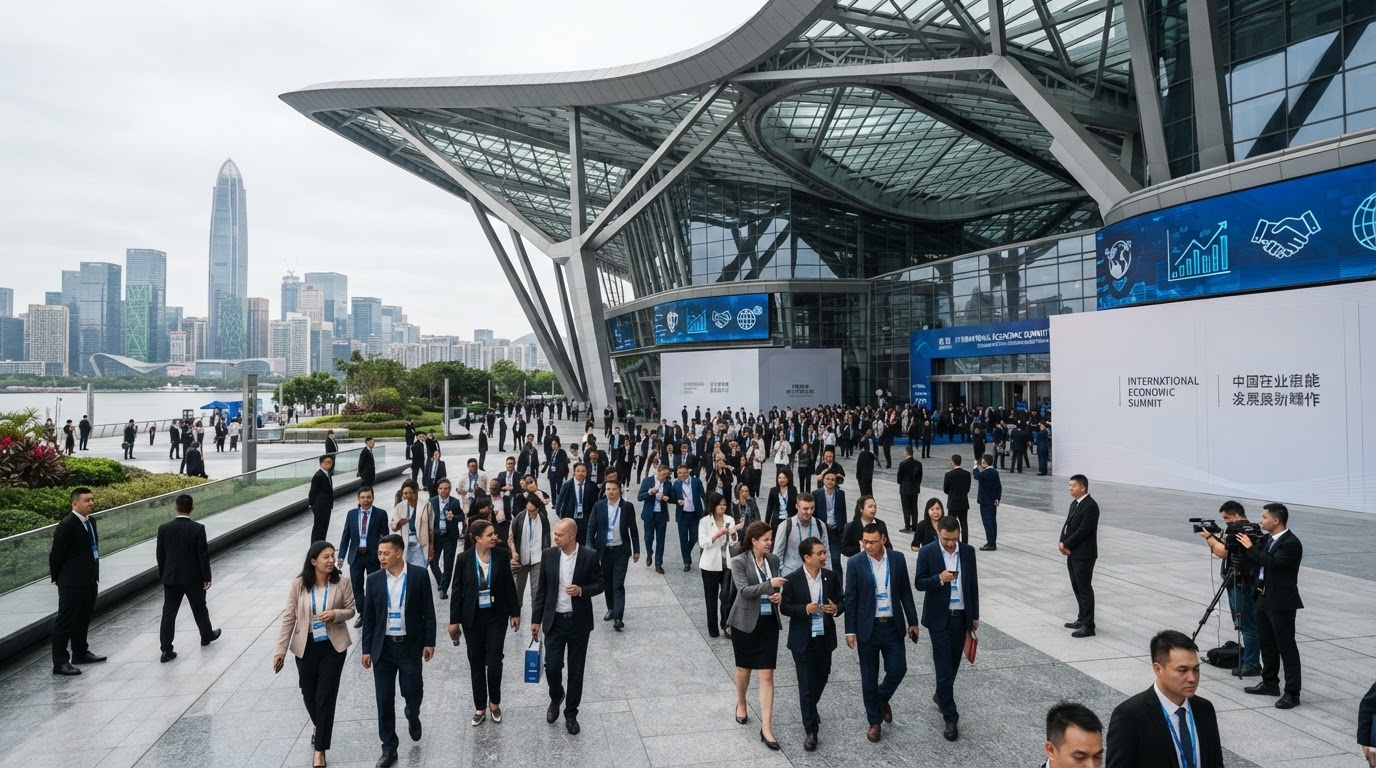
SHENZHEN — The Asia-Pacific Economic Cooperation (APEC) leaders’ meeting scheduled for 18–19 November is set to place trade, technology and regional security at the centre of the international economic agenda. With China hosting the gathering in Shenzhen, one of its most prominent technology and manufacturing centres, the meeting will draw attention to the region’s role in global growth and supply chains.
APEC’s 21 member economies account for approximately 62% of global gross domestic product and around half of world trade, according to Reuters’ overview of the summit. The forum’s decisions are generally voluntary and consensus-based, but its leaders’ discussions can signal the direction of regional cooperation.
Trade tensions meet supply-chain realities
Businesses across the Asia-Pacific region are navigating a more complicated trade environment. Tariffs, export controls and uncertainty around cross-border investment have increased the importance of supply-chain diversification. Governments are also weighing economic security against the benefits of open trade, particularly in industries where production is concentrated in a small number of markets.
Technology is likely to be a defining issue. Artificial intelligence, advanced semiconductors, data infrastructure and digital services are reshaping competition between major economies. The rules governing access to chips and other strategic technologies could influence investment decisions well beyond the technology sector, affecting automotive manufacturing, telecommunications, logistics and energy.
Critical minerals and regional security
Critical minerals and the materials needed for batteries, electronics and clean-energy systems add another layer to the agenda. Countries are seeking more resilient sources of supply, while companies face pressure to understand where key inputs originate and how geopolitical disruptions could affect production.
Diplomatic tensions will also form part of the backdrop. Reuters reports that leaders including China’s Xi Jinping, US President Donald Trump and Russia’s Vladimir Putin are expected to attend. Relations among major powers, as well as disputes involving the South China Sea and Taiwan, could complicate efforts to build consensus on economic priorities.
Why the summit matters to business
For companies operating across the region, the practical issues are market access, predictable rules, reliable logistics and the ability to invest with confidence. APEC cannot resolve every dispute, but it provides a platform for leaders to discuss shared economic challenges and identify areas where cooperation remains possible.
Investors will be watching for signals on trade policy, technology restrictions, infrastructure investment and regional stability. Any progress toward clearer rules could support confidence; sharper divisions among major economies would reinforce the case for businesses to diversify suppliers and prepare for greater uncertainty.
Source: Reuters — Five features of APEC to know about with Trump, Putin and Xi set to attend. Attendance and agenda details may change before the meeting.